
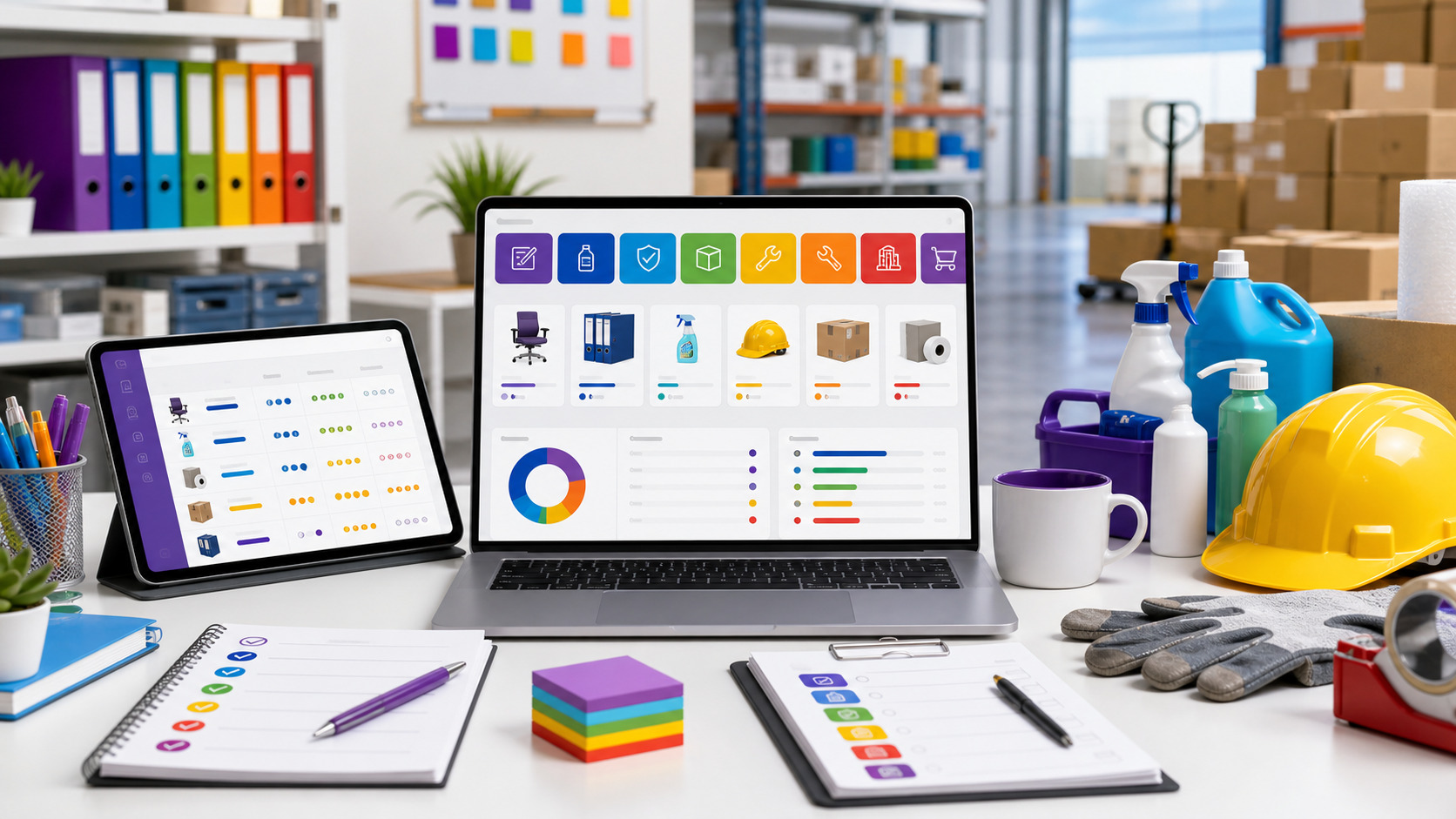
Procurement is not only for large companies
Small businesses buy many products that keep daily operations running: office supplies, housekeeping products, safety items, packaging materials, facility consumables, equipment, and maintenance products.
These purchases may look simple when handled one at a time. But over time, scattered buying creates repeated work, unclear pricing, supplier confusion, missed follow-ups, and inconsistent product quality.
Better procurement does not mean adding a complicated process. For small businesses, it means making buying more organized, reliable, and easier to repeat.
Start with the products you buy most often
The first step is to understand what your business buys regularly.
Most small businesses have repeat needs across categories such as office stationery, cleaning and janitorial supplies, safety products, health and hygiene products, packaging, industrial supplies, and building or facility materials.
Create a simple list of frequently purchased products, preferred brands where relevant, quantity ranges, and expected reorder frequency. This gives your team a clear base for comparing suppliers and planning purchases.
Reduce dependency on random sourcing
Many small businesses source products through personal contacts, old vendor lists, marketplace searches, forwarded catalogues, or last-minute calls.
That works in the beginning, but it becomes unreliable as purchase volume grows. The business may not know whether the supplier is suitable for bulk buying, whether product details are current, or whether similar alternatives are available.
A better approach is to use verified supplier and product discovery. Buyers should be able to compare categories, check product information, raise enquiries, and evaluate suppliers before committing to a purchase.
Use enquiries before placing unclear orders
Not every business purchase should move directly from search to order.
For bulk buying, recurring procurement, facility products, safety items, or category-specific requirements, an enquiry can save time. It allows the buyer to clarify quantity, availability, variants, delivery expectations, sample requirements, and support needs before moving ahead.
Sampley supports this kind of buying workflow by connecting product discovery with enquiry, sample, and order support instead of forcing every purchase into a simple one-click transaction.
Make supplier comparison more structured
Small businesses often compare suppliers only on price. Price matters, but it should not be the only factor.
A practical supplier comparison should include product fit, availability, delivery capability, minimum order quantity, response time, after-sales support, documentation, and repeat supply reliability.
When these details are organized, buyers can make better decisions and avoid switching suppliers only because one quote looked slightly lower.
Plan bulk buying where it makes sense
Bulk buying can help small businesses reduce repeated ordering and improve availability for essential items.
This does not mean every product should be bought in large quantities. Businesses should prioritize fast-moving, non-perishable, repeat-use products such as cleaning supplies, tissues, stationery, packaging materials, certain safety consumables, and facility-use items.
Before buying in bulk, check storage space, usage rate, product shelf life, supplier reliability, and whether the same item will remain useful over time.
Keep catalogue and purchase records accessible
Procurement becomes harder when information stays inside chats, calls, email threads, or individual team members' notes.
Small businesses should keep product catalogues, supplier details, enquiry history, sample requests, and order records easy to access. This helps teams reorder faster, compare past decisions, and avoid repeating the same clarification every time.
A connected catalogue and enquiry workflow is especially useful when multiple people are involved in buying or approval.
How Sampley helps small businesses buy better
Sampley is built to make business buying more practical for small teams.
Buyers can discover relevant business product categories, find suppliers, raise enquiries, request samples where needed, compare options, and move toward orders with more clarity.
Instead of managing every step manually across disconnected channels, Sampley helps bring product discovery, supplier sourcing, catalogue access, enquiries, and order workflows into a more organized buying process.
A simple procurement checklist
Small businesses can start improving procurement with a few clear habits.
List frequently purchased products. Identify reliable suppliers. Use enquiries for bulk or unclear requirements. Compare suppliers beyond price. Keep catalogue and order information accessible. Plan repeat purchases before stock runs out.
These steps are simple, but they reduce confusion and make business buying easier to manage as the company grows.
FAQ
Frequently Asked Questions
Quick answers pulled directly from this article for easier reading and better sharing previews.
What is procurement for a small business?
Procurement is the process of finding, evaluating, and buying the products or services a business needs to operate, such as office supplies, cleaning products, safety items, packaging, and facility materials.
How can small businesses choose better suppliers?
Small businesses should compare suppliers on product fit, availability, pricing, delivery capability, minimum order quantity, response time, and repeat supply reliability.
When should a small business use bulk buying?
Bulk buying is useful for repeat-use products with predictable demand, enough storage space, and low risk of expiry or product changes.
How does Sampley support small business procurement?
Sampley helps buyers discover business product categories, find suppliers, raise enquiries, request samples, compare options, and manage buying workflows more clearly.